


Table of Contents
- Vegan Skincare for Sensitive Skin: What to Look For
- Vegan, Cruelty-Free, Natural, Hypoallergenic: Clearing Up the Labels
- Quick Comparison: Our Vegan Skincare Picks
- Gentle Cleansers and Makeup Removers for Reactive Skin
- Hypoallergenic Vegan Skincare: Moisturisers and Barrier Support
- Patch Testing Skincare Products: A Step-by-Step Guide
- Vegan Skincare Ingredients to Avoid for Irritated Skin
- Building a Daily Routine for a Compromised Skin Barrier
- Pricing and Value: What to Expect
- Frequently Asked Questions
Last Updated: October 20, 2026
Vegan Skincare for Sensitive Skin: What to Look For
Vegan skincare is any product formulated without animal-derived ingredients, and for reactive skin the label alone tells you nothing about whether it will calm or inflame your face. That is the uncomfortable truth this guide from My Health A-Z starts with. The best vegan skincare brands in Australia for someone with really sensitive, reactive skin are the ones that combine a short, transparent ingredient list with fragrance-free formulas and a genuine patch-test protocol, not the ones with the prettiest botanical story.
Vegan, Cruelty-Free, Natural, Hypoallergenic: Clearing Up the Labels
These four terms mean completely different things, and conflating them is the most common mistake we see. Vegan means no animal-derived ingredients. Cruelty-free means no animal testing, which says nothing about what is in the bottle. Natural has no fixed legal definition in Australia, so a botanical extract and a naturally derived irritant can both wear the label. Hypoallergenic is a marketing claim rather than a regulated standard, so treat it as a hint, not a guarantee.
The distinction matters most for reactive skin. A product can be vegan, natural and still contain essential oils that trigger redness. Our advice: ignore the front of the pack and read the Australian Industrial Chemicals Introduction Scheme ingredient guidance for how ingredients are classified, then check the actual ingredient list.
Quick Comparison: Our Vegan Skincare Picks
Here is the short version before the detail. Every pick below is vegan, cruelty-free and formulated with sensitive or reactive skin in mind, and prices are in AUD.
| Product | Price | Best For | Key Point |
|---|---|---|---|
| Botanical Cream Face Cleanser | $25.45 | Dry, reactive skin | Non-stripping cream texture |
| Botanical Gel Facial Cleanser | $24.45 | Oily, congestion-prone skin | Deep clean without tightness |
| Botanical Facial Lotion | $29.95 | Sensitive and oily skin | Lightweight, non-greasy |
| Botanical Hydrating Moisturiser | $33.95 | Normal to dry skin | Barrier support |
| B3 B5 Moisturising Gel | $38.95 | Oily, blemish-prone skin | Niacinamide and panthenol |
| Post Treatment Gel | $45.95 | Stressed or post-treatment skin | Calming hydration gel |
| Hydrating Rose Spritzer | $14.95 | All skin types | Midday hydration |
Gentle Cleansers and Makeup Removers for Reactive Skin
Cleansing is where reactive skin usually goes wrong. Harsh surfactants strip the barrier, the skin tightens, and within an hour it is redder than before you started. A cream or gel cleanser that removes makeup and daily grime without leaving that squeaky feeling is the goal.

Our Botanical Cream Face Cleanser ($25.45) suits dry and reactive skin because it cleanses without stripping and rinses clean with a damp cloth. If your skin leans oily or congested, the Botanical Gel Facial Cleanser ($24.45) removes excess oil and makeup while maintaining the moisture barrier.
Hypoallergenic Vegan Skincare: Moisturisers and Barrier Support
A compromised barrier loses water fast, so moisturiser is the step that does the heavy lifting. Look for humectants like hyaluronic acid and glycerin, soothing botanicals like aloe and cucumber, and barrier-supporting ingredients such as ceramides or pseudo-ceramides.
For sensitive and oily skin, the Botanical Facial Lotion ($29.95) delivers lightweight hydration without grease. Normal to dry skin does better with the Botanical Hydrating Moisturiser ($33.95), which is built to strengthen the barrier and reduce moisture loss.

Patch Testing Skincare Products: A Step-by-Step Guide
Patch testing skincare products is the practice of applying a small amount to a discreet area and watching how your skin responds before you put it anywhere near your face. It is the single most useful habit for reactive skin, and most people skip it because they want the new product to work immediately.
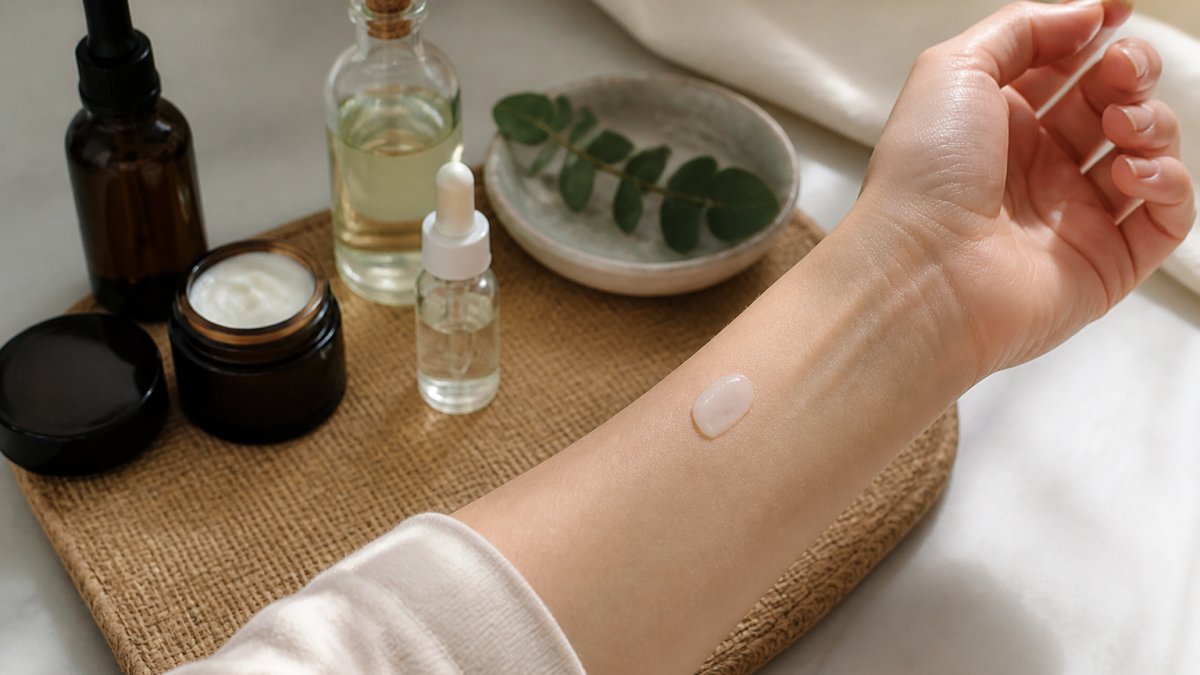
How to patch test properly
- Clean a small patch on your inner forearm or behind your ear and let it dry completely.
- Apply a thin layer of the product and leave it uncovered.
- Wait 24 hours, then check for redness, itching or swelling.
- If clear, repeat on the same spot for another 48 hours, allergy can take several days to show.
- Only then introduce it to your face, and only one new product at a time.
A common mistake is to patch test on the jawline or cheek, where the skin is thinner and more reactive than the forearm. Use the forearm first, then move to a small area of the face once the forearm test is clear.
Introducing products one at a time
When your skin is reactive, the goal is to change one variable at a time so you know what caused a reaction. A practical pattern is:
- Week 1: patch test the new product on the forearm.
- Week 2: use it on a small area of the face every second day.
- Week 3: if there is no reaction, move to daily use and only then consider adding the next product.
If you introduce a cleanser, a moisturiser and a serum in the same week and your skin flares, you have no way of knowing which one is responsible. One product at a time is slower, but it is the only way to build a routine you can trust.
Patch testing during a flare
If your skin is already reactive, do not patch test a new active or exfoliant on top of a flare. Calm the skin first with a plain cleanser and moisturiser, then patch test once the barrier has settled. Testing a new product on inflamed skin tells you nothing except that inflamed skin is inflamed.
Vegan Skincare Ingredients to Avoid for Irritated Skin
Knowing what to avoid saves more flare-ups than any single hero ingredient. For irritated skin, the usual suspects are fragrance, essential oils, drying alcohols, sulphates and some preservatives. None of these are universally harmful, but each is a common trigger in reactive skin, and the reason matters as much as the name.
Post Treatment Gel for Sensitive Skin (30ml) →
- Added fragrance and parfum: the most frequent cause of contact irritation. Fragrance mixes can contain dozens of individual compounds, and the label rarely lists them all, which makes fragrance hard to avoid unless the product is explicitly fragrance-free.
- Essential oils: lavender, citrus peel, peppermint and eucalyptus in particular. They are natural and vegan, but they contain volatile aromatic compounds such as linalool and limonene that oxidise on the shelf and become more irritating over time. A product can be essential-oil-free and still smell of nothing, which is usually the safer choice for reactive skin.
- Drying alcohols: denatured alcohol and alcohol denat high on the ingredient list. They speed up drying and can leave the barrier feeling tight, especially in a toner or gel.
- Sulphates: sodium lauryl sulphate and similar surfactants can strip the barrier and leave skin tight, particularly in a foaming cleanser.
- Physical scrubs: rough particles on an already inflamed barrier cause micro-trauma. Chemical exfoliants are not automatically safer, AHAs and BHAs can sting reactive skin, so pause both during a flare.
- Some preservatives: methylisothiazolinone and related preservatives are well-known contact allergens. They are more common in rinse-off products, but they are worth checking on the label if you have reacted before.
Soothing ingredients worth looking for
On the other side of the label, the ingredients that tend to calm reactive skin are humectants and barrier supporters: glycerin, hyaluronic acid, panthenol, niacinamide at low percentages, ceramides and squalane.
A useful rule is to compare the position of soothing ingredients against potential irritants. If fragrance or an essential oil appears above glycerin on the list, the product is probably not built for reactive skin, regardless of what the front of the pack says.
How to audit a label
Check the Australian Industrial Chemicals Introduction Scheme ingredient guidance for how ingredients are classified, and use the ASCIA allergy information for consumers if you suspect a specific allergen. Keep a simple note of what you react to, the product name, the date and the reaction, because patterns are easier to spot in writing than in memory. A short ingredient list is easier to audit than a long one, and a product with fewer than ten ingredients gives you fewer variables to test.
Building a Daily Routine for a Compromised Skin Barrier
Less is genuinely more here. A reactive barrier responds best to a short, consistent routine: gentle cleanse, one moisturiser, sunscreen in the morning, and nothing else until the skin settles. Introduce one new product at a time and give it at least a week before adding another.
Morning: rinse or gentle cleanse, moisturiser, sunscreen. Evening: cleanse, moisturiser. That is it. The Hydrating Rose Spritzer ($14.95) is a useful midday addition when skin feels tight, and the Post Treatment Gel ($45.95) is our pick for stressed or post-procedure skin, with hyaluronic acid, aloe, willowherb and cucumber to calm visible redness.

Pricing and Value: What to Expect
Vegan skincare for sensitive skin does not have to mean premium pricing. Our range runs from $14.95 for the Rose Spritzer to $45.95 for the Post Treatment Gel, with cleansers around $24 to $26 and moisturisers between $29.95 and $38.95. A complete three-step routine, cleanser plus moisturiser plus sunscreen, lands well under $100.
What you are paying for is formulation care: short ingredient lists, no added fragrance, and textures built for reactive skin rather than the mass market. Compare that against replacing products every few weeks because they irritate you, and the maths favours getting the basics right once.
Frequently Asked Questions
Can vegan skincare still irritate sensitive skin?
Yes. Vegan only means no animal-derived ingredients; it says nothing about irritation risk. Botanical extracts, essential oils and preservatives can still trigger reactive skin. Look for fragrance-free formulas, patch test first, and introduce one product at a time. Our Botanical Facial Lotion ($29.95) is designed for sensitive and oily skin, but individual results vary, so always patch test.
What ingredients should people with reactive skin avoid?
Watch for added fragrance, essential oils, drying alcohols, sulphates, and strong exfoliating acids. These can strip the skin barrier and cause redness or stinging. Check the full ingredient list rather than front-label claims. Our vegan skincare ingredients to avoid section covers this in detail, and our formulas are free from parabens, sulphates and harsh chemicals where listed.
How do I patch test a new skincare product?
Apply a small amount to your inner forearm or behind your ear, leave it for 24 to 48 hours, and check for redness, itching or swelling. If clear, try a small area on your face. Stop if irritation appears. Our Post Treatment Gel ($45.95) and other products carry a patch test recommendation because individual results vary.
Is hypoallergenic vegan skincare really allergy-proof?
No. Hypoallergenic is a marketing term, not a guarantee. It usually means the formula avoids common allergens, but anyone can react to any ingredient. Always read the ingredient list, patch test, and seek professional advice if you have a known allergy or persistent irritation.
How do I build a simple vegan skincare routine for sensitive skin?
Start with a gentle cleanser, a barrier-supporting moisturiser, and daily sun protection. Our Botanical Cream Face Cleanser ($25.45) and Botanical Hydrating Moisturiser ($33.95) suit normal to dry skin, while the B3 B5 Light Moisturising Gel ($38.95) suits oily or congestion-prone skin. Add one new product at a time and patch test each one.
Reactive skin is frustrating precisely because the wrong product sets you back weeks. If you are tired of guessing, start with our Botanical Cream Face Cleanser and Botanical Hydrating Moisturiser, patch test as outlined above, and give your barrier a fortnight of gentle, consistent care. My Health A-Z formulates every product as vegan and cruelty-free, with free shipping available, so you can build a routine that respects your skin rather than fighting it. Add to cart and begin with the basics.